You prop the phone up, hit record, and start talking. Something feels wrong within two seconds — your eyes flick to your own face in the preview, your voice goes flat, you redo the first line four times and none of them sound like you. Direct address is the hardest basic skill in short-form video and almost nobody teaches it.
The fix comes in two parts: a few mechanical decisions you can make in the next thirty seconds (where the lens sits, where your eyes land, how the opening sentence is built), then one habit that takes months. Start with the mechanics today and let the habit build underneath.
What direct address actually is
Direct address is speaking straight into the lens and addressing the viewer as “you.” In film and theater this is called breaking the fourth wall — the fourth wall being the imaginary barrier between a performance and the people watching it. Because the camera stands in for the viewer’s eye, any look into the lens lands as a look at one specific person.
That shift is the whole point. It moves the viewer from watching something happen to being spoken to, from observer to participant.
Three terms worth having, since the rest of this depends on them:
- Eyeline — where a person on camera is looking: into the lens, off to the side, down at a phone. Viewers read eyeline instantly and unconsciously.
- Camera height — where the lens sits relative to your eyes.
- Noun of direct address — the grammar term for naming who you’re talking to inside a sentence (“Founders, listen”). Always second person, and the structure your first line wants.
What I’ve seen running accounts
I run my own accounts and handle social for other people, and one pattern has held consistently enough that I treat it as a rule now:
- Showing your face beats staying faceless.
- Eyes visible beats eyes hidden behind sunglasses, a low hat brim, or a crop that cuts them off.
- Eye contact with the lens beats an eyeline drifting somewhere else.
The gap barely registers in views. Views mostly track the hook — a strong opening pulls big numbers on videos where nobody looks at the camera once. The gap shows up in conversion: saves, follows, DMs, comments written to a person, clicks that turn into customers. A video can hit huge numbers and convert nothing when the viewer never registers a living human on the other side.
That’s the real argument for direct address. It’s a conversion mechanic wearing a filmmaking costume.
You’ve scrolled past creators who do this well — the ones who feel like they’re talking to you specifically. Most people register that feeling for half a second and move on, and by tomorrow they couldn’t say what those creators did with their eyes. Hookova closes that gap: save any video that made you feel spoken to, one click from TikTok, Instagram, or YouTube Shorts, and it lands in a sorted library you can go back through frame by frame.
Where to put the lens, and where to put your eyes
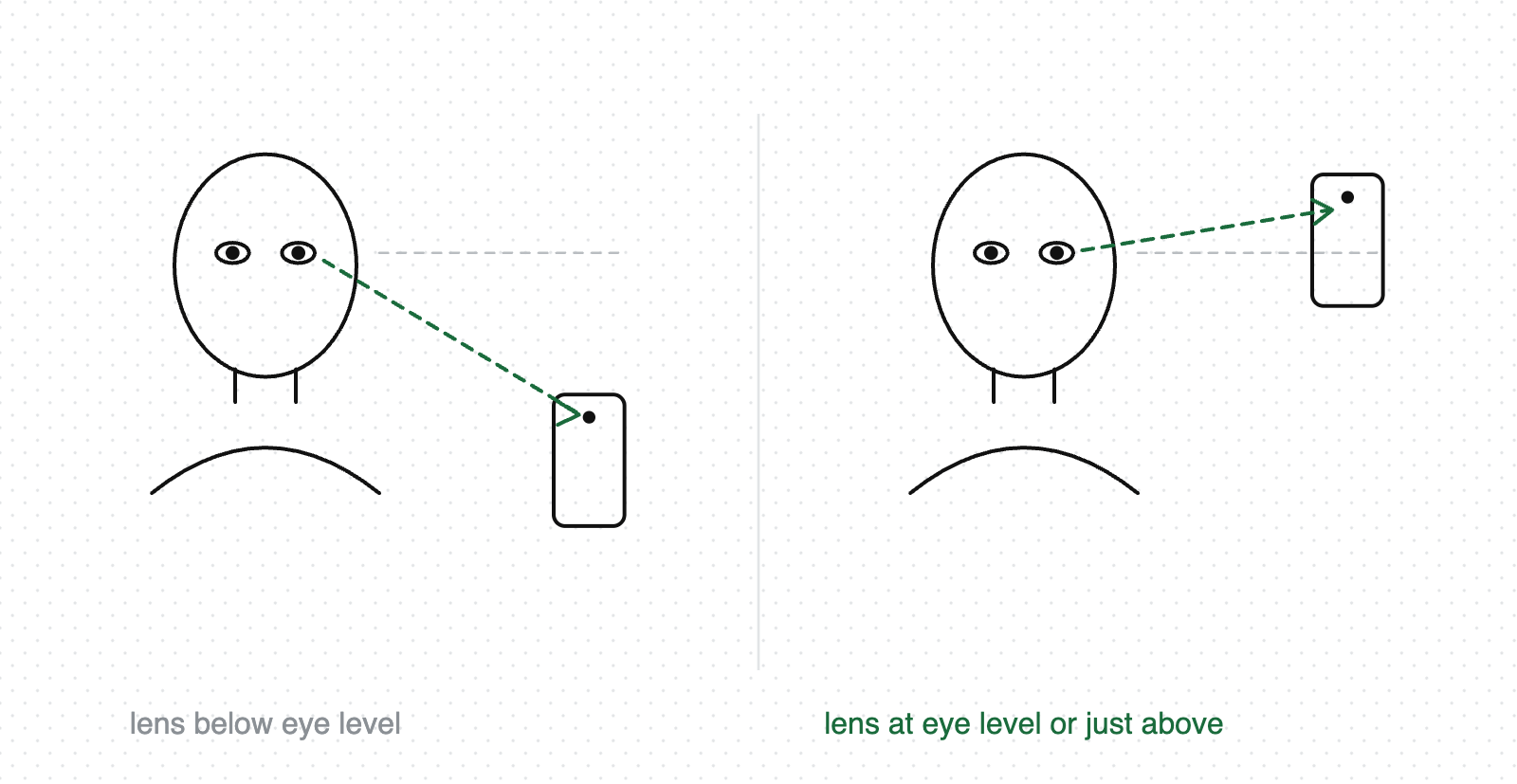
Lens at eye level or a touch above. Below eye level puts the viewer looking up at you and hands them the underside of your chin. A hair above eye level flatters most faces and reads as a natural conversational angle.
Put your eyes on the lens. The most common reason footage looks shifty is that the creator is watching their own face in the preview while talking, so their eyeline sits a few centimeters off the lens for the entire take and viewers feel it without knowing why. Cover the preview with a sticky note.
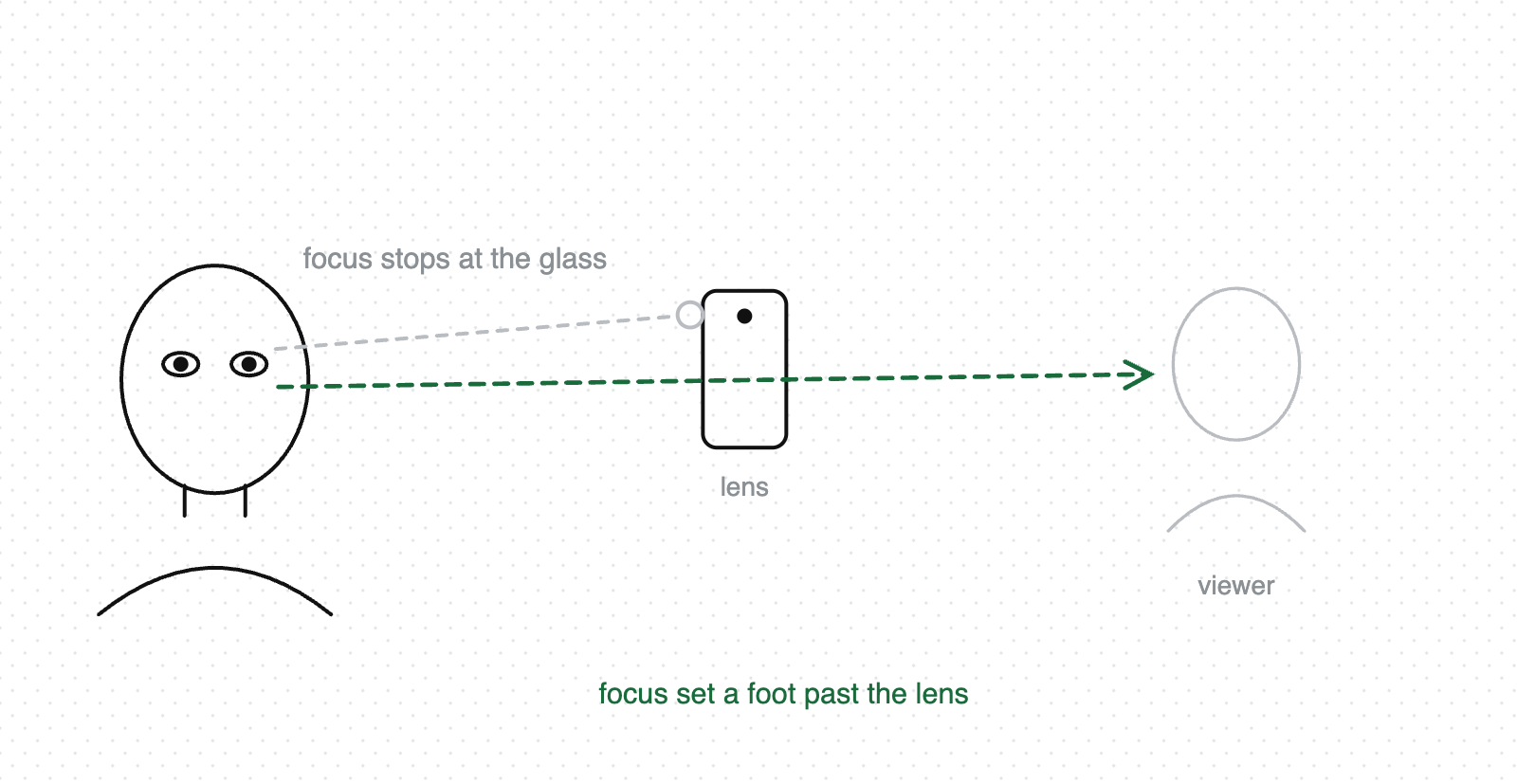
Focus past the glass. Set your eyes on a point roughly a foot behind the camera. A look focused on the lens surface lands on the phone; a look focused past it lands on the person watching. Your eyes soften, the intensity drops to conversational, and the connection gets stronger.
Hold, then release. Lock the lens for your opening line, then let your eyes break naturally as you keep talking — glancing away while thinking, returning on the important beat. An unbroken forty-second stare reads as unsettling.
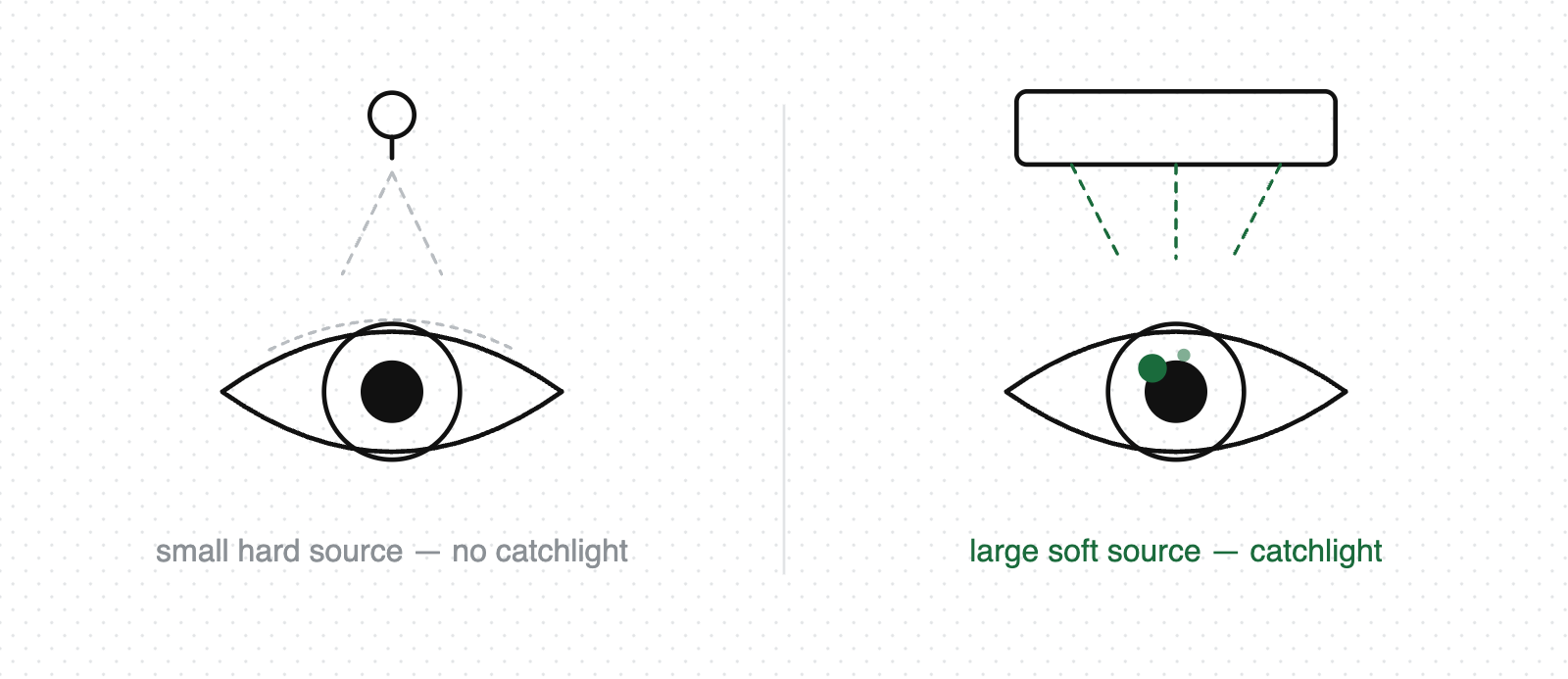
Light the eyes, or none of this lands. Cinematographers watch for the catchlight — the small reflection of your light source visible in the eye itself. Eyes with a catchlight read as alive; eyes in shadow read as flat, and every technique above stops working. A large soft source in front of you creates a wide catchlight, while a hard overhead bulb drops your eye sockets into shadow and erases it. If your eyes look dark in playback, fix that first — the fastest soft lighting setups use things already in your room.
Know when to skip it entirely. An off-lens eyeline is its own technique. It turns the viewer into an observer watching something unfold — a fly on the wall, slightly voyeuristic — which suits process shots, b-roll, and storytelling. The strongest talking-head creators switch deliberately: off-lens while narrating, snapping to the lens on the line that matters. Scripted scenes between two people run on the opposite rule, keeping the fourth wall intact and letting staging carry the tension.
Build the first line for a person
The grammar does real work here. Second person in the first five words, a noun of direct address if you have a specific audience (“If you’ve ever deleted a post an hour after publishing it, this one’s for you”), then something unresolved so the sentence can’t close on its own.
“Today I want to talk about editing” addresses nobody. “You’re overcutting your first three seconds” addresses one person and makes a claim they have to check. Same content, different grammatical subject.
The part nobody wants to hear
None of the above fixes the awkwardness. Only reps do.
Every time I start a new account, I give myself one goal for the first three months: get comfortable on camera and post every single day. Not post well. Not nail the angle, the lighting, the delivery. Just show up, film, publish, repeat. Quality is explicitly off the table for ninety days.
It works because camera fear is a familiarity problem. The lens stops registering as a lens somewhere around week six, and after that your face does what it does when you’re talking to a friend. There’s no shortcut around that stretch. Creators who look natural on camera are almost never naturally comfortable — they’re just past it.
That habit is also why Hookova exists. Running my own accounts and clients’ accounts, I kept saving videos I wanted to learn from and losing them, so I built the tool I needed for my own workflow.
FAQ
Does direct address mean I have to show my face?
No, though what I’ve seen consistently favors it. Faceless formats work and remain a legitimate strategy at scale. They just tend to convert at lower rates for the same view count, because there’s nobody for the viewer to attach to.
Where exactly do I look on my phone?
The front camera lens, usually a small dot near the top edge of the screen. Find it once and remember where it sits, because your instinct pulls you toward the center of the screen where your own face is.
Is looking away from the camera always a mistake?
No. An off-lens eyeline creates an observational, fly-on-the-wall feel that suits stories, process footage, and b-roll. The mistake is drifting off-lens by accident during a line meant to land on the viewer.
How long until talking to camera stops feeling awkward?
For most people, six to twelve weeks of near-daily filming. It comes down to exposure hours.
Does eye contact help with the algorithm?
Indirectly. Watch time and engagement feed distribution, and direct address tends to lift both. The clearer effect sits downstream, on the actions that follow the view.
Whether your direct address lands is hard to judge from behind the camera — you felt connected, and the footage reads as stiff. Hookova breaks a finished video down second by second, including where the opening beat puts the viewer. See the full range of hook types it recognizes in the video hooks guide.