Archives: Aurapalm Crystal Archive

  • Black Tourmaline

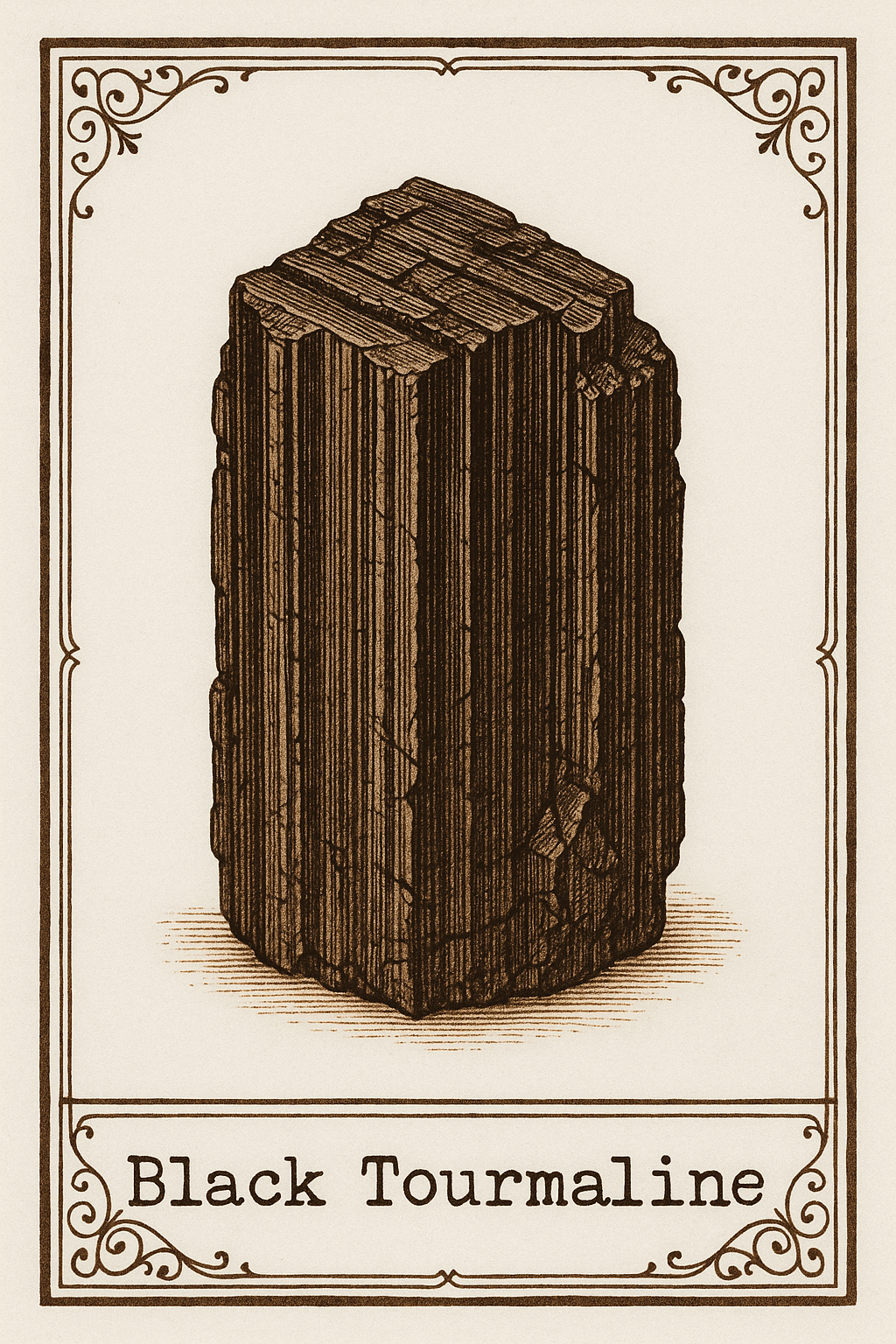
    Black Tourmaline

    Black Tourmaline Meaning: Midnight black, steady as bedrock.

    Black tourmaline is the “feet-on-the-floor” stone—good when nerves spike, rooms feel loud, or you’ve been living from the neck up.

    It won’t turn you into a bouncer; it just gives your body and boundaries a little gravity.

    (Want stones matched to your palm traits? Scan your hand in Aurapalm and see which crystals pair with your head line and heart line.)

    The vibe (and who naturally clicks with it)

    Think weight, warmth, and a quiet center.

    Black tourmaline doesn’t hype you; it settles you. People who tend to bond with it:

    • The Sensitive Antenna — absorbs moods, leaves gatherings drained.
    • The Doomscroller — mind races, shoulders ride up, sleep says “nope.”
    • The Over-Extended Helper — gives a lot, forgets to plug in the charger.
    • The Calm Builder — wants stable routines and clear “no, thank you”s.

    It’s the energetic equivalent of heavy boots and a warm mug—less spin, more spine.

    Chakra notes: Root first, everything else follows

    Black tourmaline is worked with at the Root chakra (base of the spine). Root in check → the rest of the system gets easier.

    • Body signals: slower breath, looser jaw, shoulders down.
    • Mood signals: less reactivity, steadier “baseline okay.”
    • Behavior signals: cleaner boundaries that don’t need a ten-sentence essay.

    When Root switches from “flicker” to steady power, your head stops flying the plane alone.

    Personality cues (read yourself here)

    • You take on other people’s stress like it’s your side gig.
    • Your focus shatters in noisy spaces.
    • You say yes while your body screams no.
    • You keep promising yourself a bedtime—and missing it.

    If two or more lines landed, black tourmaline makes sense. It doesn’t erase life; it thickens your buffer.

    How to use black tourmaline (real life, simple steps)

    The 1-minute “Heavy Feet” reset

    Stand with feet hip-width. Hold the stone in your dominant hand or place it over your lower belly. Breathe 4-4-6 (inhale 4, hold 4, exhale 6) for six rounds while imagining weight dropping through your heels.

    Say once: “I am here now.”

    Workday placement

    Put a palm stone at the front edge of your desk. When tabs multiply, touch the stone, relax your jaw, and pick one next action.

    Threshold stone

    Set a chunk by the door. Tap it on the way out/in as a tiny ritual: leave other people’s stuff outside, bring only what’s yours.

    Pocket carry & commute

    Keep a tumbled piece in a coat pocket. Grip it on trains, elevators, or crowded rooms—short exhale, shoulders drop.

    Great pairings

    • Selenite → quick “reset and clear.”
    • Smoky quartz → extra calm in the body.
    • Amethyst → quiet mind + grounded focus.
    • Clear quartz → structure and follow-through.

    (In Aurapalm you can save this as a 1-minute ritual with a timer.)

    Palm insight tie-in (why this stone shows up in scans)

    • Life line looks light, broken, or far from the thumb → stamina and grounding may dip; black tourmaline supports “back-in-body” moments.
    • Head line shows feathering/islands → attention scatters; pairing tourmaline with short breathing cues lowers noise.
    • Thumb tension (pressed tight to palm) → willpower overdrive; a tourmaline bracelet during planning helps choose enough over everything.

    This is supportive guidance, not medical advice.

    Care & cleansing (minimal fuss, maximum life)

    Black tourmaline (schorl) sits around Mohs ~7–7.5—hard, but brittle along its striations. Treat it like ceramic: strong to wear, unhappy with drops.

    • Clean: brief rinse, mild soap, soft cloth. Avoid long soaks and harsh chemicals.
    • Sun: generally stable, but no need to bake it—store away from prolonged, intense sun.
    • Cleansing: sound, smoke, moonlight, selenite plate, or a rest on clear quartz.
    • Storage: raw pieces can shed; pouch them. Tumbled stones are sturdier for pockets.
    • Jewelry note: prefer bezel settings or sturdy beads; be mindful with elastic bracelets.

    Buying & styling tips

    Choose deep, even black with natural striations (fine vertical lines). For daily carry, go tumbled (pockets, palm).

    For home, a chunk or tower by the entry or workspace works well. Price scales with size, finish, and craftsmanship—and with how often you’ll actually use it.

    Sellers who clearly state origin and treatments are worth bookmarking.

    Tiny FAQs

    Can I sleep with black tourmaline nearby?

    Many people keep a piece by the bed for a calmer body tone. If you feel wired, move it farther away and try again.

    Is it “EMF protective”?

    Many folks place it near devices as a reminder to take breaks and keep good habits. Scientific evidence is limited; use it as a behavior cue, not a shield.

    Water-safe?

    A quick rinse is fine. Avoid long soaks; raw pieces can shed.

    Best pairing for “calm + clear”?

    Try black tourmaline + amethyst (quiet mind) or black tourmaline + clear quartz (grounded follow-through).

    Why does raw black tourmaline shed little splinters, and how should I store it?

    Black tourmaline grows as striated prisms and is brittle along those grooves.

    Raw pieces can flake or shed needle-like splinters if dropped or rubbed in bags. Store in a soft pouch, avoid loose pockets or mixing with harder stones/keys, and handle edges gently. Tumbled stones shed far less and are better for daily carry.

    Is black tourmaline “EMF protective”? What’s a practical approach?

    Scientific evidence for EMF shielding by pocket stones is limited. If you like using tourmaline, treat it as a behavior cue: keep devices at a reasonable distance, use speaker mode/earbuds, take screen breaks, and park chargers away from the bed. Good habits make the difference; the stone can remind you to use them.

    How do I tell black tourmaline from obsidian, onyx, or hematite?


    • Black tourmaline (schorl): matte–vitreous luster, visible vertical striations, brittle splinters, not heavy for its size.


    • Obsidian: volcanic glass with mirror-like shine, conchoidal (shell-like) fractures, no striations.


    • Onyx: a banded chalcedony often dyed solid black; fine, waxy luster; no striations.


    • Hematite: metallic steel-gray shine, much heavier; may streak reddish on unglazed tile (don’t test on finished surfaces).


      Use look, luster, weight, and striations—and ask sellers for clear labeling.


    Can black tourmaline go in water, salt, sun, or ultrasonic/steam cleaners?

    • Water: quick rinse is fine; avoid long soaks (can exploit micro-cracks).
    • Salt: skip salt baths—can dull polish and irritate drilled holes in beads.
    • Sun: generally stable, but there’s no benefit to long sunbathing; store out of harsh, prolonged light.
    • Ultrasonic/Steam: not recommended for fractured/raw pieces. Safest clean = mild soap + soft cloth.

    Best practices for jewelry—rings, bracelets, pendants?

    Tourmaline is hard (Mohs ~7–7.5) yet brittle, so protect from knocks. Prefer bezel or guarded prong settings for rings; pendants/earrings are lower-risk. For bead bracelets, choose quality elastic/wire, avoid heavy impacts, and roll on/roll off rather than pulling. Wipe sweat/sunscreen residue with a soft cloth to keep the surface crisp.

    What affects price and what should I ask sellers?

    Price tracks crystal size, surface luster, sharp striations, complete terminations, and polish/craftsmanship (for tumbled/jewelry). Origins include Brazil, Madagascar, Namibia, Pakistan, Afghanistan, among others. Ask: “Raw or tumbled?”, “Any stabilization or coatings?”, “Exact piece shown?”, and “Return policy?”. Clear disclosure is a green flag.

    The short of it

    Black tourmaline = body back online.

    Less static, more signal. Use it when rooms feel sharp, plans feel slippery, and you want your boundaries to speak in a calm, confident tone.

    Ready to match crystals to your palm traits?

    Open Aurapalm, scan your hand, and get a short list (plus a 1-minute ritual) tuned to your head line and heart line.
  • Aquamarine

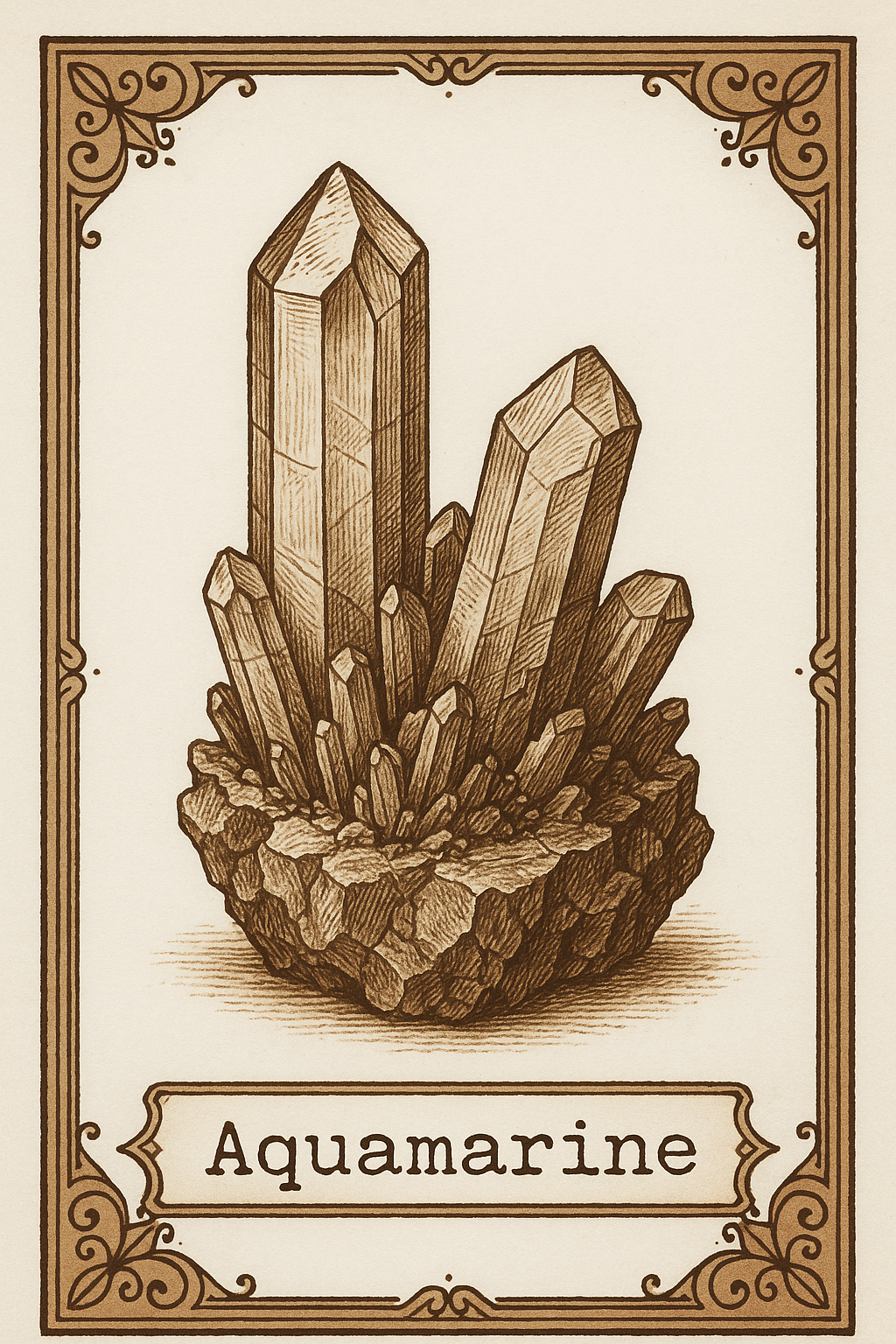
    Aquamarine

    Meaning: Steady Tide, Brave Voice

    Sea-blue calm, honest courage.

    Aquamarine is the moment your shoulders drop and your words find their rhythm—clear, kind, and steady. It doesn’t turn you into someone else; it helps the real you come through without the wobble.

    (Want stones that match your palm traits? Scan your hand in Aurapalm and see which crystals pair with your head line and heart line.)

    The vibe (and who naturally clicks with it)

    Think clean air after rain: brighter, lighter, easier to breathe. Aquamarine is famous for cooling the mind and warming the courage—a soft push toward speaking up without spiking your nervous system.

    People who tend to bond with it:

    • The Calm Advocate — wants to say the thing, minus the drama.
    • The Sensitive Presenter — heart races on stage, message gets muddled.
    • The Peaceful Planner — prefers clarity, hates conflict cycles.
    • The Gentle Explorer — moving through change with steady steps (new job, new city, new you).

    It’s not “be fearless.” It’s be clear—and bring your kindness with you.

    Chakra notes: Throat with a whisper of Heart

    Aquamarine is worked with mainly at the Throat chakra, with a soft link to the Heart.

    • Throat → smooth articulation, even pacing, fewer verbal detours.
    • Heart → courage with care, honesty with empathy.

    When those centers collaborate, you get brave words in a gentle container—exactly the tone difficult conversations need.

    Personality cues (read yourself here)

    • You rehearse conversations in the shower, then freeze when they start.
    • Your voice tightens when stakes feel high.
    • You avoid “the talk,” then resent the silence.
    • You’re kind—but your message gets lost in qualifiers.

    If two or more lines sting a little, aquamarine is a good ally. It won’t bulldoze your fear; it right-sizes it.

    How to use aquamarine (real life, simple steps)

    The 1-minute “Brave Voice” reset

    Touch the stone to your throat. Breathe 4-4-6 (inhale 4, hold 4, exhale 6) for six rounds. Whisper once: “Clear words, open heart.” Send the text. Start the meeting. Have the talk.

    Workday placement

    Keep a small stone by your webcam or mic. Before you present, rest two fingers on it and read your first sentence out loud. You’ll hear the calm.

    Boundary practice

    Wear a necklace that sits near the throat. Pair aquamarine with amazonite when you need clarity + softness, or with lapis when you need clarity + structure.

    Travel & change

    Aquamarine has long been a sailor’s talisman; many people use it as a transition stone—new roles, new routines, new shores. Pocket piece, quick breath, go.

    Great pairings

    • Amazonite → calm delivery, gentle boundaries.
    • Lapis lazuli → order and authority in your message.
    • Clear quartz → extra crispness and follow-through.
    • Rose quartz → truth wrapped in warmth.

    (In Aurapalm you can save this as a 1-minute ritual with a timer.)

    Palm insight tie-in (why this stone shows up in scans)

    • Head line shows islands or zig-zags → mental wind; aquamarine helps you streamline the sentence and keep pace.
    • Heart line ends abruptly or looks shallow → compassion is there, but hard to express; the stone encourages kind candor.
    • Index finger (leadership finger) tilts inward or tension shows at the thumb → confidence wobble; keep aquamarine near planning tools to speak decisions calmly.

    Nothing here replaces professional advice; think of aquamarine as a tone-tuner, not a cure-all.

    Care & cleansing (keep the sea-blue glow)

    Aquamarine is a member of the beryl family—sturdy enough for daily wear, still worth a little care.

    • Clean: quick rinse, mild soap, soft cloth.
    • Sun: generally stable, but avoid prolonged intense sunlight to keep color happy.
    • Cleansing: sound, smoke, moonlight, selenite plate, or a short rest on a clear-quartz cluster.
    • Jewelry note: avoid harsh chemicals and extreme heat; treat elastic or cord bracelets gently.

    Buying & styling tips

    Look for even, ocean-calm blue—from pale seafoam to deeper lagoon.

    Deeper blues are rarer (and pricier); soft pastel can be perfect for daily wear.

    For bracelets and necklaces, check stringing quality and clasps; for rings, choose a protective setting if you’re hard on your hands.

    Price scales with color depth, clarity, cut, and craftsmanship—choose the piece you’ll actually use.

    Tiny FAQs

    Can I keep aquamarine by my desk?

    Yes. It’s a great pre-call cue for steady speech and even pacing.

    Is it water-safe?

    A brief rinse is fine. Avoid harsh chemicals and long soaks, especially for jewelry.

    Does aquamarine fade in sun?

    Color is typically stable, but long, intense sun can dull the vibe—store away from windows.

    Best pairing for “calm courage”?

    Try aquamarine + amazonite (kind boundaries) or aquamarine + lapis (clear authority).

    Why does aquamarine color range from pale seafoam to deep “Santa Maria” blue?

    Color comes from iron (Fe²⁺/Fe³⁺) in beryl and how the stone is cut. Some rough leans slightly green; gentle heat treatment often removes the green tint to emphasize blue. Deep, even “Santa Maria–style” blues are rarer and usually pricier. Ask sellers about treatment disclosure and origin (e.g., Brazil, Madagascar, Nigeria, Pakistan).

    Is aquamarine typically heat-treated—and does that affect value or durability?

    Yes, low-temperature heating is common and considered standard in the trade. It’s stable and doesn’t harm durability. Untreated stones with naturally strong blue can command a premium; lightly heated stones offer cleaner color at approachable prices. Always request clear disclosure.

    Aquamarine vs. blue topaz vs. amazonite vs. apatite—quick ways to tell them apart?

    • Aquamarine (beryl): transparent to translucent, vitreous luster, Mohs ~7.5–8, typically eye-clean to slightly included.

    • Blue topaz: usually a more saturated, uniform blue (often irradiated + heated), Mohs 8, high brilliance.

    • Amazonite: opaque blue-green feldspar with white streaks/veins; softer (~6–6.5).

    • Apatite: can be neon blue but softer (~5) and scratches easily; often shows more visible inclusions.

      Magnification, hardness, and overall look usually settle it fast.

    Can aquamarine go in water, sun, salt, or ultrasonic/steam cleaners?

    • Water: brief rinse with mild soap is fine; avoid long soaks.
    • Sun: generally stable, but skip prolonged intense sunlight to keep color fresh.
    • Salt/Beach: salt can dull polish and attack metal settings—rinse with fresh water after exposure.
    • Ultrasonic: usually OK for clean stones, but avoid if there are cracks, liquid inclusions, or glued settings.
    • Steam: not recommended. When in doubt, use a soft cloth.

    What should I look for when buying aquamarine jewelry for daily wear?

    Prioritize color you love, even cut, and secure settings. Rings see the most knocks—choose bezel or protective prongs. Pendants/earrings are lower-risk and show color well. Confirm metal quality, check bracelet/necklace clasp and stringing, and clean sunscreen/soap residue regularly to keep brilliance.

    Any practical tips for using aquamarine as a calm-speaking cue (without the woo)?

    Treat it like a behavioral prompt before calls or presentations: hold the stone near the throat, do 5-5-5 box breathing (inhale 5, hold 5, exhale 5) for 30–45 seconds, then speak your first sentence out loud once. This helps pacing and clarity. It’s a routine aid, not medical advice.

    The short of it

    Aquamarine = calm courage. It gives your voice sea-level steadiness and your heart a microphone. Use it when stakes are high, nerves are loud, and you want the message to land—clean, kind, and true.

    Ready to match crystals to your palm traits?

    Open Aurapalm, scan your hand, and get a short list (plus a 1-minute ritual) tuned to your head line and heart line.
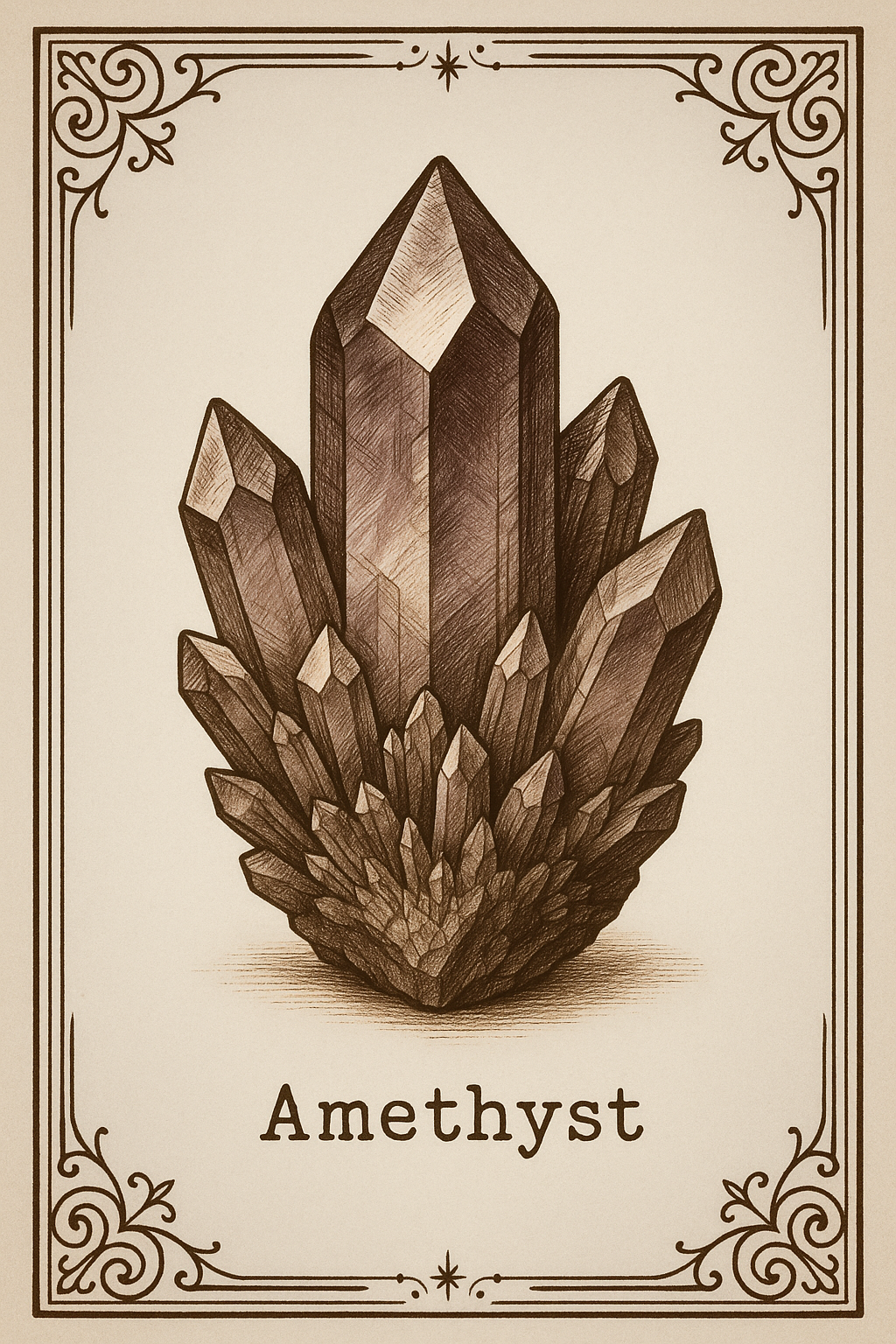
  • Amethyst

    Amethyst

    Amethyst Meaning: Quiet Mind, Clear Spirit

    Soft purple, softer edges. Amethyst is the exhale after a long day—the stone people reach for when the mind won’t stop refreshing and the heart wants a gentler tone. It’s steadiness without sleepiness, clarity without the caffeine jitters.

    (Want stones that match your palm traits? Scan your hand in Aurapalm and see which crystals pair with your head line and heart line.)

    The vibe (and who naturally clicks with it)

    Think calm focus. Amethyst turns down the mental volume so your attention can land on one thing at a time.

    People who tend to bond with it:

    • The Night Owl with Tabs Open — sleeps with three thoughts at once.
    • The Gentle Strategist — likes a plan, hates the spiral.
    • The Resetter — building steadier habits, breaking loops that don’t serve.
    • The Sensitive Leader — holds space for others without losing their own center.

    It’s less “zone out,” more tune in—the feeling of a room going from echoey to acoustically treated.

    Chakra notes: Third Eye meets Crown

    Amethyst is commonly worked with at the Third Eye (between the brows) and Crown (top of the head).

    • Third Eye → perception, pattern recognition, the “aha” after the noise drops.
    • Crown → spaciousness, perspective, a kinder view of yourself and others.

    When those two centers sync, the to-do list stops barking and your inner narrator changes from critic to coach.

    Personality cues (read yourself here)

    • You grab your phone “just to check” and suddenly it’s midnight.
    • You replay conversations like a sport.
    • You love clarity but your brain loves clutter.
    • You’re steady for everyone else and tired for yourself.

    If two or more nods happened, amethyst belongs on your desk or nightstand. It won’t change who you are; it reminds you to be present for what matters.

    How to use amethyst (real life, simple steps)

    The 1-minute “Quiet Mind” reset

    Hold a piece of amethyst at the brow. Breathe 4-4-6 (inhale 4, hold 4, exhale 6) for eight rounds. Whisper once: “Quiet mind, steady focus.” That’s it. Do it before bed, before deep work, or when you feel the scroll coming on.

    Workday placement

    Keep a small cluster by your keyboard. When a task splits into five, touch the stone and choose one next action. Single-task for 10 minutes.

    Sleep wind-down

    Set a palm stone on your nightstand. Lights low, three slow breaths, phone face down. If you feel wired, move the stone a bit farther away and try again tomorrow—find your distance.

    Habit support

    Pair amethyst with a timer and tiny goals (10 pages, 5 push-ups, 3 lines of journaling). The stone becomes a cue: start small, stay kind.

    Great pairings

    • Clear quartz → amplifies intention and structure.
    • Lepidolite → softens edges on anxious days.
    • Black tourmaline → grounds scattered focus.
    • Selenite → gentle reset after heavy conversations.

    (In Aurapalm you can save this as a 1-minute ritual with a timer.)

    Palm insight tie-in (why this stone shows up in scans)

    • Head line shows islands or chains → signal noise and attention leak. Amethyst helps you land on one thought, one step.
    • Heart line runs wavy or fragmented → emotional whiplash after long days. The stone encourages pacing and softer self-talk.
    • Thumb pulled tight to the palm → willpower overused; place amethyst near your planning space to choose enough instead of everything.

    None of this replaces professional advice. Think of amethyst as a tone-tuner, not a cure-all.

    Care & cleansing (keep the glow, skip the drama)

    Amethyst is quartz (hardness ~7), so it’s sturdy—but a little care goes a long way.

    • Clean: brief rinse, mild soap, soft cloth.
    • Sun: avoid long sunbathing; color can fade with strong, prolonged light.
    • Cleansing: sound, smoke, moonlight, selenite plate, or a quick rest on a clear-quartz cluster.
    • Storage: separate from harder stones and metals to prevent scratches.

    Buying & styling tips

    You’re looking for even, lush purple—from lilac to deep grape—without harsh neon. A little natural zoning is fine; a uniform, plastic-looking purple is a red flag.

    For decor, clusters and geodes throw soft, calming light; for daily carry, a palm stone or beaded bracelet keeps the cue within reach.

    Price scales with color depth, clarity, size, and craftsmanship—choose what you’ll actually use.

    Tiny FAQs

    Can I sleep with amethyst by my bed?

    Many people do. If you feel more alert instead of calm, move it a bit farther away and try again.

    Is it water-safe?

    A quick rinse is fine. Avoid harsh chemicals and long soaks.

    Where should I place it for focus?

    On your desk within reach of your dominant hand, or on a bookshelf you face during deep work.

    Best pairing for “calm but productive”?

    Try amethyst + clear quartz (focus) or amethyst + black tourmaline (focus + grounding).

    Does amethyst actually help with sleep or focus—and how should I place it?

    Many people use amethyst as a routine cue for wind-down or single-task focus.

    Try a palm stone on the nightstand (not under the pillow) and do 3 slow breaths before lights out; for work, keep a small cluster by your keyboard and touch it before starting one task.

    This is a behavioral reminder, not a medical treatment—if sleep or attention issues persist, seek professional support.

    Will amethyst fade in sunlight? How do I prevent it?

    Yes—prolonged, strong sunlight can lighten amethyst’s purple (UV sensitivity). Keep geodes and clusters out of window glare and avoid long sunbaths.

    Normal indoor light is fine. For display, choose indirect light or rotate pieces periodically; store jewelry in a pouch when not worn.

    Natural, heat-treated, or synthetic amethyst—how can I tell, and what should I ask sellers?

    • Natural often shows gentle color zoning/banding and tiny inclusions.

    • Heat-treated material can appear more even or brownish-orange (sometimes sold as “citrine”).

    • Lab-grown (hydrothermal) tends to be very clean and uniformly colored.

      Ask: “Is the color natural or treated?”, “Lab-grown or natural?”, “Any disclosure certificate?”, and “Is this the exact piece pictured?” A gem lab can test if you need certainty.

    Why is some ‘citrine’ actually heated amethyst? Is that a problem?

    Citrine is part of the quartz family like amethyst. Much of the deep orange “citrine” on the market is heat-treated amethyst—still quartz, just a different color process.

    It’s not “bad,” but it should be clearly labeled so you can choose between natural citrine (often paler honey tones) and heated (deeper orange). Price and preference vary by disclosure, color, and cut.

    Cluster, geode, tumbled, chevron, ametrine—what’s the difference and which is best for me?

    • Cluster/Geode: lots of points, great for desks or shelves (avoid knocks).

    • Tumbled/Palm stone: smooth, pocket-friendly for daily cues.

    • Chevron amethyst: purple + white V-shaped bands (quartz + amethyst layers)—popular for meditation.

    • Ametrine: natural amethyst + citrine in one stone (purple + yellow); nice for focus + follow-through.

      Pick form by use case: desk focus → cluster; nightly wind-down → palm stone; jewelry → well-set cabochon or faceted piece.

    What’s the safest way to clean and “cleanse” amethyst? Can it go in water or salt?

    For physical cleaning, use mild soap + water + soft cloth; avoid long soaks, harsh chemicals, and ultrasonic/steam on heavily included or fracture-filled pieces.

    For symbolic “cleansing,” many people use sound, a brief smoke pass, moonlight, a selenite plate, or resting on clear quartz. Skip salt baths (can scratch or dull metal findings).

    If you enjoy “gem water,” use an indirect method (stone in a dry glass set inside your water) and treat it as aesthetic, not a health product.

    The short of it

    Amethyst is your “one tab at a time” stone—quieting the echo, sharpening the signal. Use it when you want better sleep hygiene, steadier habits, and a mind that’s actually on your side.

    Ready to match crystals to your palm traits? Open Aurapalm, scan your hand, and get a short list (plus a 1-minute ritual) tuned to your head line and heart line.
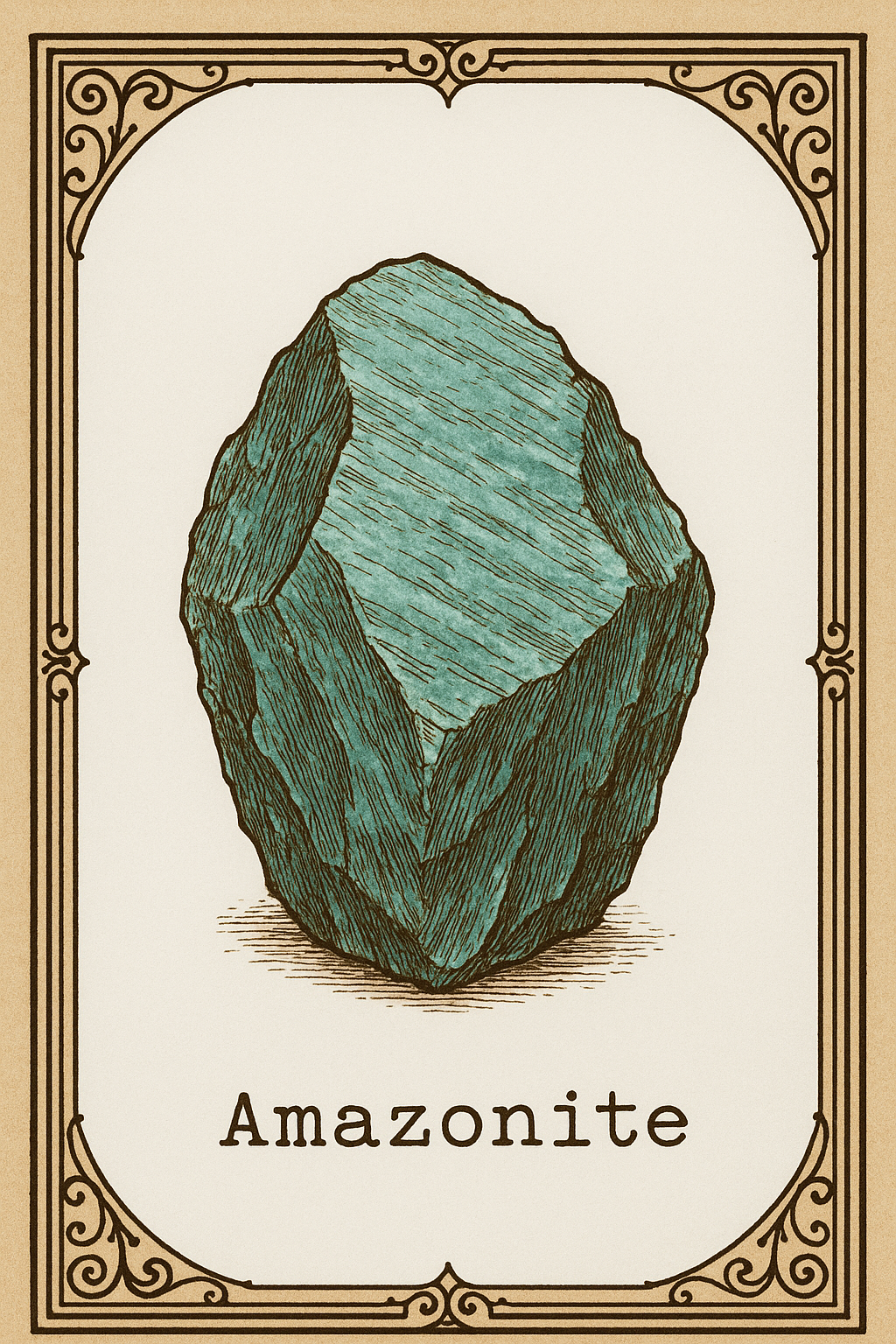
  • Amazonite

    Amazonite

    Amazonite Meaning: Calm Voice, Clear Heart

    Cool green, calm voice. Amazonite has the vibe of a slow river over smooth stones—settling your nerves, softening your tone, and helping you say what you mean without turning ice-cold. If you’ve been oscillating between “swallow it” and “overshare it,” amazonite sits you in the clear middle. In crystal terms: amazonite meaning and properties center on balanced communication, gentle boundaries, and relief from mental static.

    Want crystal picks that match your palm traits? Scan your hand in Aurapalm and see which stones harmonize with your head line and heart line.

    The vibe (and who naturally clicks with it)

    Think steadiness + sincerity. Amazonite doesn’t shout; it balances. People who tend to bond with it:

    • The Diplomat — wants honesty, not heat. Values nuance, hates drama.
    • The Boundary-Setter — learning to say “no” without guilt or barbed wire.
    • The Recovering Overthinker — spirals less, speaks more simply.
    • The Soft Leader — gives direction with grace, especially in creative teams or caregiving roles.

    In rooms where the energy runs sharp, amazonite is that friend who pours water into the tea—flavor intact, bitterness gone.

    Chakra notes: Throat meets Heart

    Amazonite is often worked with at the Throat and Heart chakras—the bridge between truth and tenderness.

    • Throat: clear wording, measured pace, fewer “um… actually.”
    • Heart: warmer intent, easier forgiveness, boundaries without resentment.

    When those two centers sync, you get sentences that land clean and kind—the exact combo that fixes most “we need to talk” moments.

    Personality cues (read yourself here)

    • You rehearse texts in your head four times.
    • You agree to things and regret it ten minutes later.
    • You avoid calls because “tone is hard by phone.”
    • You write long emails when three sentences would do.

    If two or more resonate, amazonite is a solid first stone. It won’t change who you are; it reminds you to be the version of you that’s already calmer and clearer.

    How to use amazonite (real life, not rituals-only)

    The 1-minute “Calm Voice” reset

    Touch the stone to your throat, breathe 4-4-6 (inhale 4, hold 4, exhale 6) for six rounds, then say once: “Clear words, kind intent.” Do it before a meeting, text, or thorny conversation.

    Workday placement

    Keep a palm stone by your keyboard. When you feel yourself speed up, rest two fingers on it and read your message once out loud. You’ll trim the spikes.

    Relationship check-in

    Wear a necklace near the throat when you need to be honest but gentle. Pair it with rose quartz if you’re processing hurt; with lapis when you need clarity and structure.

    Sleep wind-down

    Set it on your nightstand. Three slow breaths, one line of intention, phone face down. Quieter mind, fewer 1 a.m. rewrites.

    Great pairings

    • Lapis lazuli → truth with order.
    • Rose quartz → truth with warmth.
    • Black tourmaline → truth without static.

    Inside Aurapalm you can save this as a 1-minute ritual with a timer.

    Palm insight tie-in (why this stone shows up in scans)

    • Head line looks chained or frayed → mental noise; amazonite helps you simplify phrasing so you don’t argue your own point.
    • Heart line shows breaks or islands → emotional spikes; the stone encourages pacing, not suppression.
    • Thumb presses tight to the palm → willpower overflexed; an amazonite bracelet during planning meetings softens “must” into “want to.”

    None of this replaces professional advice. It’s gentle support for your tone, not a cure-all.

    Care & cleansing (keep the glow, skip the drama)

    Amazonite is sturdy enough for daily wear but appreciates a light touch.

    • Clean: quick rinse, soft cloth. Skip harsh chemicals and salt baths (they can dull the polish).
    • Sun: brief sunlight is fine; avoid long sunbathing to prevent fading.
    • Cleansing: sound, smoke, moonlight, selenite, or a clear-quartz cluster are all easy options.
    • Storage: it sits around 6–6.5 on the Mohs scale—store away from harder stones to avoid scratches.

    Buying & styling tips

    You’re looking for serene blue-green with natural white veining—think lagoon, not neon highlighter. Palm stones should feel smooth and cool, bracelets should use quality elastic/wire and a secure clasp. Pricing rises with color evenness, size, and craftsmanship; trust sellers who are clear about origin and treatments.

    Tiny FAQs

    Can I keep amazonite by my bed?

    Yes. Many people use it for a softer mental tone at night. If sleep feels buzzy, move it a little farther away.

    Is it water-safe?

    A quick rinse is fine. Avoid long soaks and salt water.

    Where should I wear it?

    Near the throat for wording, on the dominant wrist for outgoing messages (texts, emails, meetings).

    Why does amazonite range from mint to turquoise, and are white streaks normal?

    Color varies with trace chemistry and structure—some pieces lean minty green, others more blue-green. The pale white streaks are typical for microcline feldspar and often show grid-like twinning; they’re a sign of natural structure, not damage.

    How can I tell natural amazonite from dyed look-alikes or glass?

    Check for natural white veining (not printed dots), a vitreous but not glassy luster, and no trapped bubbles (glass). Dyed howlite/magnesite may show pores and overly even color. Ask the seller about dye tests, disclose of stabilization, and a return policy; a quick acetone swab on an inconspicuous spot (with permission) can reveal surface dye.

    Is amazonite treated or stabilized? What should I ask before buying?

    Light waxing or oiling is common to enhance polish; occasional resin stabilization is used for crumbly material. Neither changes it into another stone, but treatment should be disclosed. Ask: “Natural color or any dye?” “Any resin/wax stabilization?” “Origin?” and “Is this the exact piece shown?”

    Amazonite vs. turquoise/jade/aventurine—how do they differ at a glance?

    • Turquoise: waxy luster, spider-web matrix; softer on average.
    • Jade (jadeite/nephrite): tougher, more “greasy” luster; usually lacks amazonite’s grid-like streaks.
    • Aventurine: quartz with sparkling mica (aventurescence), not the soft white veining.
    • Chrysocolla: often more patchy blue-green and softer.
    • Dyed howlite/glass: pores or bubbles; color too uniform.

    Is amazonite safe to wear daily? I read about trace elements—should I worry or make “gem water”?

    Polished amazonite is generally safe for wear and decor. As with any mineral, avoid creating dust and don’t ingest the stone; skip direct-contact “gem water.” If you enjoy the look, use an indirect method (stone in a dry glass placed inside a water container) purely for aesthetics, not as a health product.

    The short of it

    Amazonite equals calm delivery. It puts your heart in your voice and your mind on one channel. Use it when you want fewer edits, gentler boundaries, and conversations that end with, “Thanks—that actually helped.”

    Ready to match crystals to your palm traits? Open Aurapalm, scan your hand, and get a short list (plus a 1-minute ritual) tuned to your head line and heart line.
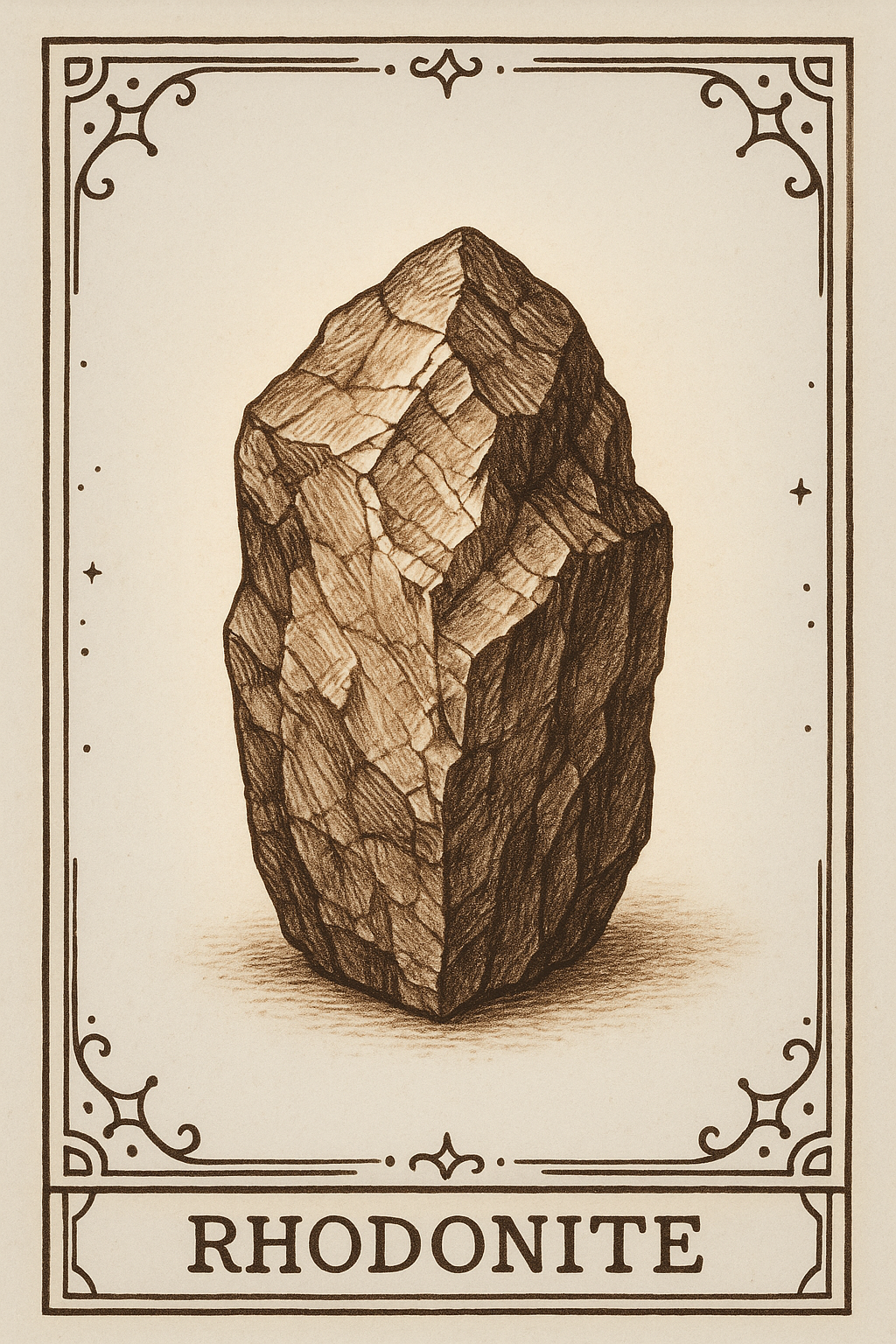
  • Rhodonite

    Rhodonite

    Rhodonite

    Meaning: Repair + Release, Useful Compassion

    Rose‑pink with inky veining. Rhodonite is tough love with soft hands—helping you repair, forgive, and move on with grace.

    The vibe

    Think calm cleanup after a spill. People who click with rhodonite:

    • The Rebuilder — mends trust with actions
    • The Reflective Friend — honest and kind
    • The Boundary Healer — cares without overgiving
    • The Steady Partner — chooses repair over repeat

    Chakra notes: Heart + Root

    • Heart: compassion, repair
    • Root: safety, stability

    Personality cues

    • You carry old stories that weigh today down.
    • You want apologies that change behavior.
    • You’re learning to care without rescuing.
    • You prefer progress over perfection.

    How to use rhodonite

    The 1‑minute “Repair Begins” reset

    Hands over heart. Breathe 4‑4‑6 for six rounds. Say: “Name it. Fix it. Let it go.”

    Workday placement

    By your reflection tool (journal/notes); write one repair step.

    Threshold cue

    Tap it before hard talks; choose tone and outcome.

    Great pairings

    • Rose quartz → warmth
    • Black tourmaline → grounded boundaries
    • Clear quartz → plan clarity

    Palm insight tie‑in

    • Heart line broken → practice small repairs.
    • Head line chains → simpler phrasing.
    • Thumb tension → choose humane pace.

    Care & cleansing

    • Clean: quick rinse, soft cloth.
    • Sun: generally fine; avoid extremes.
    • Cleansing: sound, smoke, moonlight, selenite.
    • Storage: (~5.5–6.5 Mohs) store gently.

    Buying & styling tips

    Look for balanced pink with natural black veining. Palm stones and beads make steady daily cues.

    Tiny FAQs

    Water‑safe?

    Brief rinse is fine; dry well.

    Best use case?

    Repair in motion—action plus compassion.

    The short of it

    Rhodonite = repair you can live with.

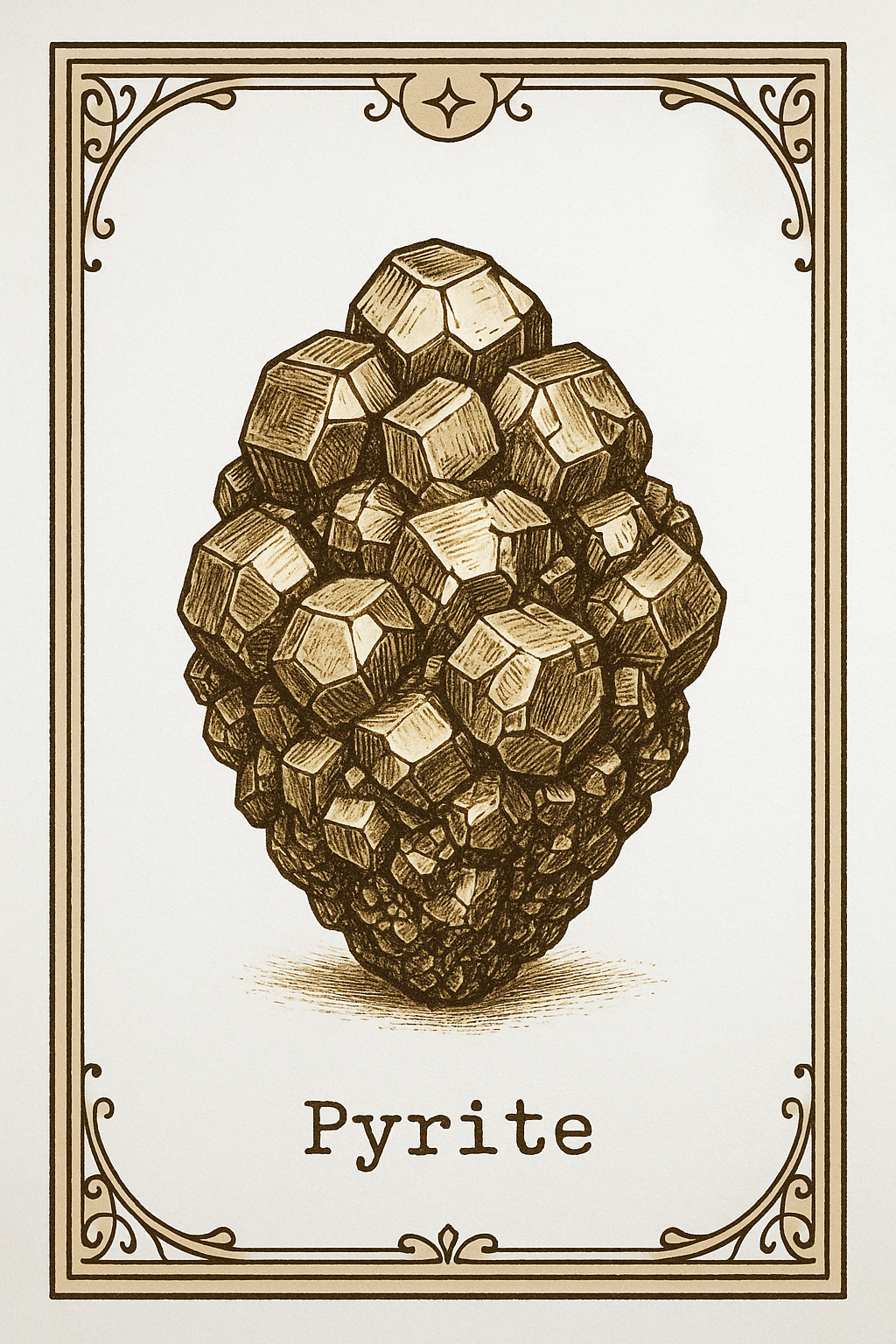
  • Pyrite

    Pyrite

    Pyrite

    Meaning: Bold Plan, Grounded Confidence

    Sun‑bright metallic cubes. Pyrite turns good ideas into sturdy plans—confidence with calendar, not bravado.

    The vibe

    Think practical bravery. People who click with pyrite:

    • The Builder of Things — wants substance over hype
    • The Planner — aligns goals and resources
    • The Presenter — speaks with steady presence
    • The Protector — healthy boundaries around time/energy

    Chakra notes: Solar Plexus + Root

    • Solar Plexus: self‑trust, execution
    • Root: stability, follow‑through

    Personality cues

    • You have ideas; you want traction.
    • You over‑promise, under‑prioritize.
    • You want confidence that lasts past Monday.
    • You like a plan you can measure.

    How to use pyrite

    The 1‑minute “Make It Real” reset

    Hold the stone; write one outcome, one constraint, one next step. Breathe 4‑4‑6. Say: “Plan, act, review.”

    Workday placement

    At your planning spot; touch before you calendar the next block.

    Presentation cue

    In your pocket—stand, breathe, speak the opener once.

    Great pairings

    • Citrine → momentum
    • Clear quartz → structure
    • Black tourmaline → grounded presence

    Palm insight tie‑in

    • Head line straight → sequence decisions.
    • Mars lines faint → schedule recovery time.
    • Thumb tension → choose scope that fits.

    Care & cleansing

    • Clean: dry cloth; avoid long moisture exposure (can tarnish/oxidize).
    • Sun: stable; avoid extreme heat.
    • Cleansing: sound, smoke, moonlight, selenite.
    • Storage: keep dry; separate from pieces that scratch.

    Buying & styling tips

    Look for crisp cubic structure and bright luster. Clusters energize desks; tumbled pieces make sturdy pocket cues.

    Tiny FAQs

    Water‑safe?

    Keep dry; wipe only.

    Best use case?

    Planning you’ll actually execute.

    The short of it

    Pyrite = confident plans. Fewer promises, more delivery.

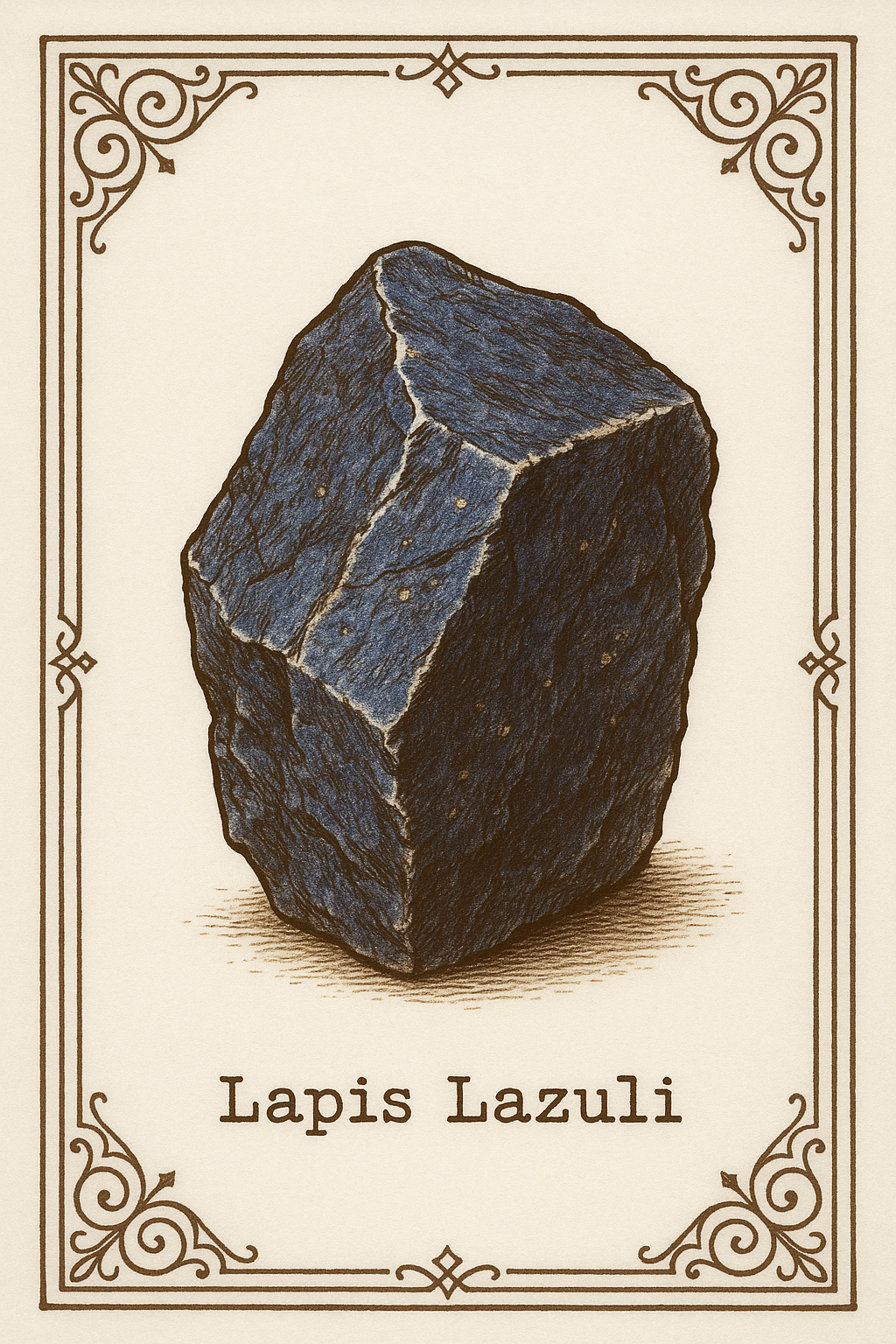
  • Lapis Lazuli

    Lapis Lazuli

    Lapis Lazuli

    Meaning: Truth with Structure, Wise Voice

    Royal blue with golden flecks. Lapis brings order to insight and backbone to your message.

    The vibe

    Think clear directive, kind delivery. People who click with lapis:

    • The Thoughtful Leader — authority without edge
    • The Strategist — structured thinking, clean language
    • The Teacher — clarity and presence
    • The Repairer — honest, grounded talks

    Chakra notes: Throat + Third Eye

    • Throat: articulation, authority
    • Third Eye: insight, synthesis

    Personality cues

    • You know the truth; wording wobbles.
    • You have ideas; the outline is messy.
    • You want firm boundaries with calm tone.
    • You value wisdom more than volume.

    How to use lapis lazuli

    The 1‑minute “Blueprint” reset

    Outline three bullets. Breathe 4‑4‑6. Say: “Clear order, true words.”

    Workday placement

    By your agenda or outline; speak your opener once.

    Pair for repairs

    With rose quartz to keep warmth.

    Great pairings

    • Amazonite → soft delivery
    • Aquamarine → calm courage
    • Clear quartz → tighter structure

    Palm insight tie‑in

    • Head line straight/long → structure supports scale.
    • Mercury mount active → refine, then deliver.
    • Heart line broken → truth with care.

    Care & cleansing

    • Clean: damp cloth; avoid harsh chemicals and long soaks.
    • Sun: generally fine; avoid extremes.
    • Cleansing: sound, smoke, moonlight, selenite.
    • Storage: (~5–6 Mohs) softer; store gently.

    Buying & styling tips

    Look for rich ultramarine with fine pyrite flecks and minimal calcite streaks, depending on taste.

    Tiny FAQs

    Water‑safe?

    Avoid soaking; wipe clean.

    Best use case?

    Pitching, teaching, boundary talks with clarity + calm.

    The short of it

    Lapis lazuli = truth in order. Calm authority, clear message.

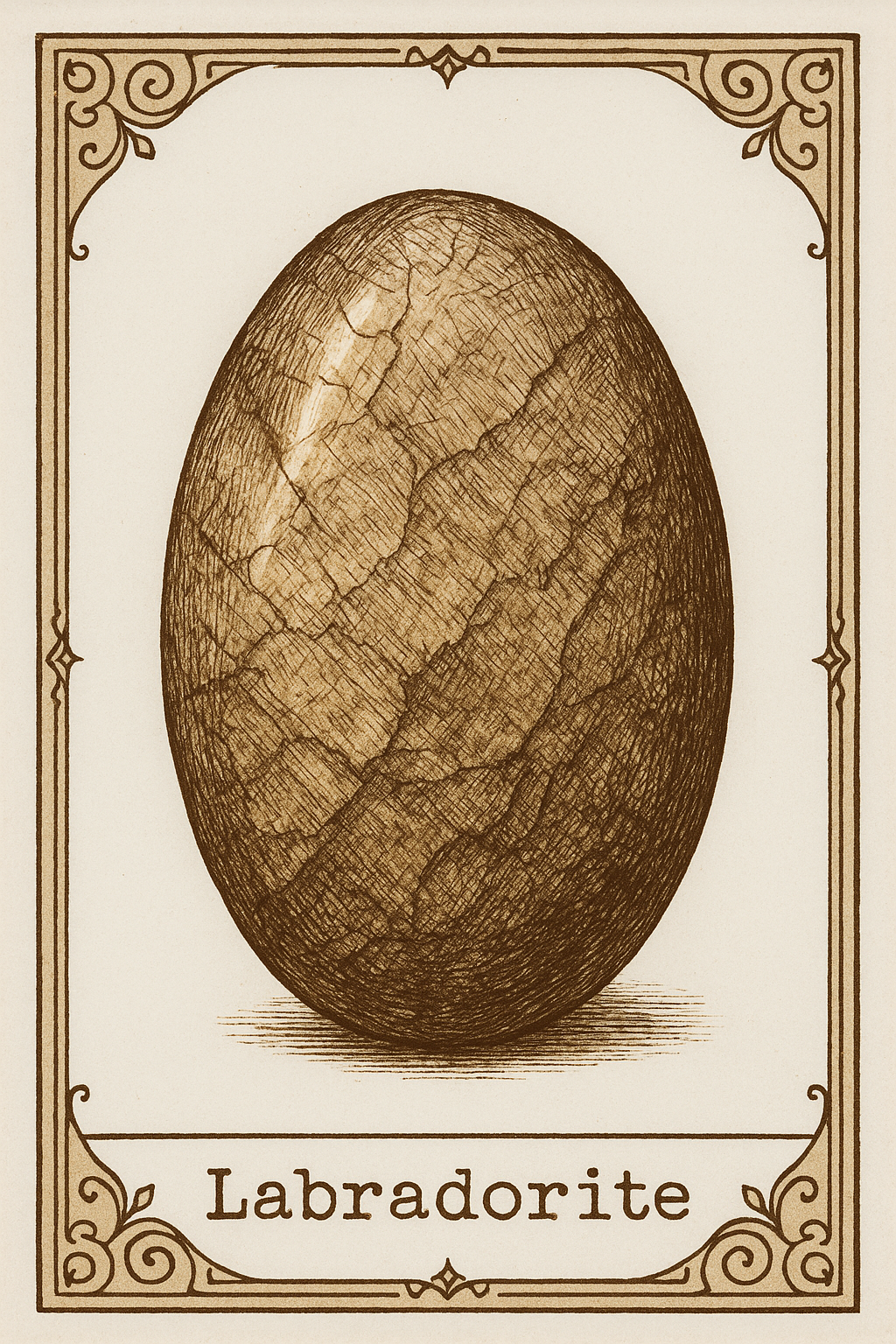
  • Labradorite

    Labradorite

    Labradorite

    Meaning: Inner Spark, Protective Focus

    Smoke‑gray mystery with flashes of blue‑green. Labradorite shields attention from static and reignites curiosity.

    The vibe

    Think night sky with northern lights. People who click with labradorite:

    • The Intuitive Builder — trusts hunches, tests ideas
    • The Creative — protects deep‑work time
    • The Explorer — moves through change with wonder
    • The Sensitive Pro — keeps energy from scattering

    Chakra notes: Third Eye with subtle Shield

    • Third Eye: imagination, insight
    • “Shield” effect: encourages attention boundaries

    Personality cues

    • You’re inspired until interruptions break the spell.
    • You sense patterns before you can explain them.
    • You want space for deep work without isolation.
    • Your best ideas arrive in quiet.

    How to use labradorite

    The 1‑minute “Spark + Shield” reset

    Hands at brow, breathe 4‑4‑6 for six rounds. Say: “Bright idea, steady focus.”

    Workday placement

    By headphones or timer; start a 25‑minute block.

    Threshold cue

    Keep by your studio/desk door—enter with intent, leave with closure.

    Great pairings

    • Black tourmaline → body grounding
    • Clear quartz → amplify structure
    • Amethyst → quiet mind

    Palm insight tie‑in

    • Head line long/curved → channel creativity into sequences.
    • Mercury lines active → protect focus windows.
    • Thumb tension → set kinder limits.

    Care & cleansing

    • Clean: soft cloth; brief rinse OK.
    • Sun: generally fine; avoid prolonged heat/light.
    • Cleansing: sound, smoke, moonlight, selenite.
    • Storage: feldspar (~6–6.5 Mohs); avoid sharp knocks.

    Buying & styling tips

    Look for strong labradorescence (color flash) and clean polish. Flat cabochons show the sheen best.

    Tiny FAQs

    Does flash angle matter?

    Yes—rotate under light to see color play.

    Water‑safe?

    Brief rinse is fine; dry well.

    The short of it

    Labradorite = spark protected. Imagination on, distractions down.